

Stephen M. Carmel & MarAd are aiming to make this U.S. Maritime Rebuild StickFor anyone who has spent a career in the U.S. maritime industry, the past two years have been unusual by any metric. Maritime has moved from the far margins of federal policy discussions to center stage, with rebuilding American shipbuilding

China's state-owned shipping giant COSCO uses concealed equipment on board its ships to spy on military communications near the coastlines of target nations including the U.S., two senior Trump administration officials said.The officials, who spoke on condition of anonymity to discuss the U.S.

Batteries have become a practical part of maritime decarbonization. They are used on ferries, harbor craft, tugs, offshore support vessels, crew transfer vessels, various types of remotely operated vessels, and hybrid ships to reduce fuel burn, provide spinning reserve, support dynamic positioning, enable peak shaving, and allow zero-emission operation in port.

Taking your children or grandchildren for a ride on the Merry-Go Round may be a pleasant past memory. With that memory, we are asking to think about your choice of the best horse as you board the platform. A decision resting upon what you want out of the ride. Now consider that selection to the current state of US shipbuilding.

Michael Carter and Steven Henderson grew up together in North Carolina, attended the United States Merchant Marine Academy (USMMA) together, and most recently jointly founded Fleet Zero, a company aiming to develop modular, containerized battery technology for electrifying cargo ships.

Two more tankers laden with crude exited the Strait of Hormuz last week with trackers switched off to avoid Iranian attacks, Kpler shipping data showed, underscoring a rising trend to sustain Middle East oil exports.The very large crude carrier (VLCC) Basrah Energy loaded 2 million barrels of Upper Zakum crude from Abu Dhabi National Oil Co's (ADNOC's) Zirku terminal on May 1 and exited the
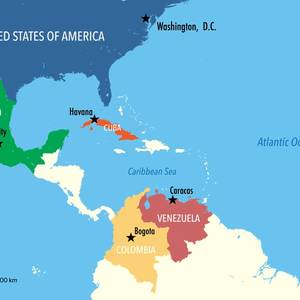
Cuban forces killed four people and wounded six others aboard a Florida-based speedboat that entered Cuban waters on Wednesday and opened fire on a Cuban patrol, the Cuban government said at a time of heightened tensions with the United States.The wounded were evacuated and receiving medical attention, while the Cuban patrol commander was also wounded, Cuba's Interior Ministry said in a statement

Tim Mooney is the third-generation family member at the helm of the iconic Fire Island Ferries. While the company’s primary focus has been moving people to and fro, from the Long Island, NY mainland to the Fire Island barrier communities and beaches, the business has evolved and grown since its start in 1948 via acquisition and organic growth.

As global demand for data storage and processing accelerates — driven by cloud computing, streaming media, and the explosive growth of artificial intelligence — the physical footprint of data centers has become a growing challenge. Land-based facilities face mounting constraints: limited space, water scarcity, grid congestion, long permitting timelines and rising community opposition.

The U.S. inland waterways don’t just move cargo — they move people into long-term, well-paid careers. At a time when trucking and rail struggle with shortages, turnover, and burnout, inland waterways operators quietly offer something different: a job you can start without experience, a career you can grow into, and a paycheck that gets better every step of the way.
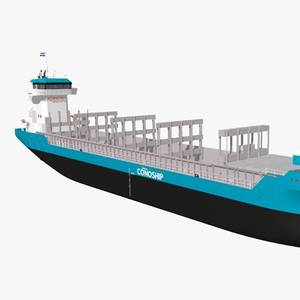
On October 28, 2025 U.S. Senator Dan Sullivan (R-Alaska), Chairman of the Senate Committee on Commerce, Science, and Transportation’s Subcommittee on Coast Guard, Maritime, and Fisheries, convened the Senate hearing “Sea Change: Reviving Commercial Shipbuilding”. This hearing examined how to modernize and accelerate U.S.
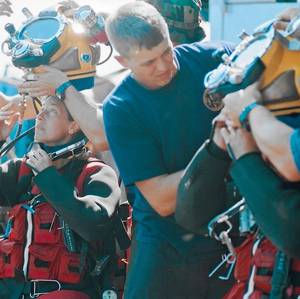
By Captain Bobbie Scolley, U.S. Navy (ret.) and Rear Admiral Tim Gallaudet, U.S. Navy (ret.)For more than six decades, spanning from 1905 to the late 1970s, the U.S. Navy’s diving apparatus for deep ocean operations and salvage remained fundamentally unchanged. During this period, the demographic of navy divers also saw little alteration.