

Diamond Gas Jade, a 174,000-cu.-m. Liquefied Natural Gas (LNG) carrier invested by a joint venture under U-Ming Marine Transport Corp., held its grand naming ceremony on May 19 at the Samsung Heavy Industries Geoje Shipyard. Built by Samsung Heavy Industries, Diamond Gas Jade is equipped with the latest energy-saving environmental technologies and a dual-fuel propulsion engine.

Japanese shipping company NYK has conducted a maritime emergency response drill simulating the grounding of a large bulk carrier and a subsequent fuel oil spill in Japan's Seto Inland Sea.The full-day exercise, held on September 30, involved a simulated accident aboard an NYK-owned and operated bulk carrier managed by NYK Bulkship Partners (NBSP), an NYK Group company.

Malin Group has been awarded Silver in the Defence Employer Recognition Scheme (ERS). The silver award, representing the second-highest accolade available through the Defence Employer Recognition Scheme, demonstrates their support for the Armed Forces community, spanning Reservists, service leavers, cadets and military families.

On September 18, NYK held a naming ceremony for a newly built liquefied natural gas (LNG) carrier at HD Hyundai Samho Co., Ltd. in the Republic of Korea. The ceremony was attended by distinguished guests and stakeholders, including Tetsuro Wada, CEO of Diamond Global Energy Pte. Ltd. (DGE), and Ryutaro Okuzawa, Executive Officer of NYK. During the ceremony, Mr.

An Alaska federal judge on Monday threw out a lawsuit by environmental groups challenging President Donald Trump’s move to allow offshore drilling along broad swaths of previously protected coastline.U.S. District Judge Sharon L. Gleason found the lawsuit by groups, including the Northern Alaska Environmental Center

Sea1 Offshore has launched the Sea1 Diamond, the first vessel in a series of four offshore energy support vessels under construction at COSCO Shipping.The float-out marks a key milestone in Sea1 Offshore's newbuild program, with the company describing the vessel as the start of a new chapter for its fleet.

A newly Russian-flagged LNG tanker - Arctic Express - has picked up a cargo of liquefied natural gas from a floating storage facility used to trans-ship gas from the Arctic LNG 2 project, which is under U.S. sanctions, LSEG data showed.Arctic LNG 2, initially planned to be one of Russia's largest LNG plants with an eventual output of 19.

The American Pilots’ Association (APA) is concerned that the ongoing Department of Homeland Security (DHS) funding lapse is negatively impacting the ability of the U.S. Coast Guard (USCG) to carry out critical navigation safety and mariner credentialing services. “APA and our member pilot associations value the important navigation safety and credentialing services the USCG provides.

Offshore drilling contractor Seadrill has appointed Samir Ali as its new chief executive officer (CEO).Effective immediately, Samir Ali will step up from its Executive Vice President, Chief Commercial Officer (CCO) position to its new role, succeeding Simon Johnson.Ali has served as Executive Vice President, Chief Commercial Officer of the company since August 2022.

Canadian EV shipbuilder Voltari Marine Electric Inc. is expanding its North American manufacturing footprint with the establishment of a new U.S. facility in Bay County, Florida. As part of a strategic growth initiative formerly known as “Project Kilowatt,” Voltari will acquire and transform the Queen Craft Shipyard, operating since 1974, to support increased production capacity for U.S.

KNUD E. HANSEN, a naval architecture and marine engineering consultancy, has announced a milestone in its ongoing collaboration with Ferry Holdings Limited. Following the successful signing of the shipbuilding contract with Guangzhou Shipyard International (GSI), two new RoPAX vessels will be built.
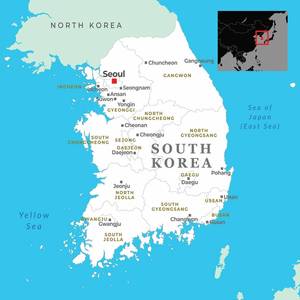
All 267 people on board a South Korean passenger ferry that ran aground off the southwestern tip of the Korean peninsula on Wednesday were rescued, in an incident that revived memories of the major ferry disaster in 2014 in which 300 people died.Passengers and crew were taken from the stricken vessel, the Coast Guard said in a statement, and 27 sustained minor injuries.