

Shipping through the Strait of Hormuz slowed over the weekend, data showed on Monday, following attacks on tankers, while U.S.-Iran talks to resolve the Middle East conflict stalled.Five commodity vessels transited the strait on Saturday, with none registered for Sunday, shiptracking data from Kpler showed, versus 31 in the prior weekend.

One Indian crew member was killed and eight others were wounded when two Emirati oil tankers were struck by Iranian cruise missiles in the Strait of Hormuz, the United Arab Emirates Ministry of Defence said on Tuesday, in the latest escalation in the strategic waterway.Abu Dhabi National Oil Company's shipping arm ADNOC L&S later confirmed the very large crude carriers (VLCCs) Mombasa B and Al

At least four oil and gas tankers have turned back from attempting to transit the Strait of Hormuz, ship-tracking data showed, as renewed attacks on vessels in the critical waterway heightened safety and security concerns.The diversions come after a Qatari liquefied natural gas tanker and a Saudi-flagged crude oil tanker were damaged near the strait on Tuesday following reports that Iran fired

Fewer vessels transited the Strait of Hormuz on Friday than earlier this week, hours after a Taiwanese-operated ship was fired on by Iran, ship tracking data showed.Maritime and Port Authority of Singapore (MPA) Confirms EVER Lovely DamageThe Maritime and Port Authority of Singapore (MPA) is aware that the Singapore-registered container ship EVER LOVELY sustained minor damage to the bridge area

Since the Iranian Revolution and overthrow of Shah Mohammad Reza Pahlavi in 1979, the Strait of Hormuz has been a geographic constant as a choke point for which closure has been threatened from time to time but never truly closed. The longstanding assumption of the continued openness of the strait collapsed on February 28, 2026.

A Chinese supertanker carrying two million barrels of Iraqi crude sailed through the Strait of Hormuz on Wednesday after being stranded in the Gulf for more than two months due to the U.S.-Iran war, LSEG and Kpler ship-tracking data showed.The VLCC Yuan Hua Hu is now anchored off the Gulf of Oman, near where the U.S. Navy has set up a blockade on Iranian vessels, LSEG data showed.

Two more tankers laden with crude exited the Strait of Hormuz last week with trackers switched off to avoid Iranian attacks, Kpler shipping data showed, underscoring a rising trend to sustain Middle East oil exports.The very large crude carrier (VLCC) Basrah Energy loaded 2 million barrels of Upper Zakum crude from Abu Dhabi National Oil Co's (ADNOC's) Zirku terminal on May 1 and exited the
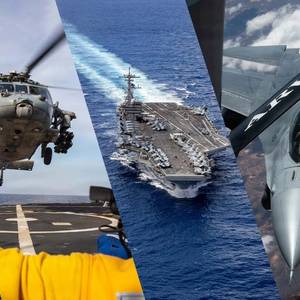
The U.S. military said on Monday it destroyed six Iranian small boats and intercepted Iranian cruise missiles and drones as Tehran sought to thwart a new U.S. naval effort to open shipping through the Strait of Hormuz.U.S. President Donald Trump launched the operation, called Project Freedom, on Monday as he sought to wrest control of the critical waterway from Iran

Panama-flagged tanker Idemitsu Maru, carrying 2 million barrels of Saudi oil, crossed the Strait of Hormuz, LSEG shipping data showed on Tuesday, becoming the first Japan-linked crude tanker to do so since the Iran war began.Before the U.S.-Iran conflict broke out on February 28 and disrupted Middle East crude oil and liquefied natural gas supplies

An LNG tanker managed by UAE's ADNOC has crossed the Strait of Hormuz and appears to be near India, ship-tracking data showed on Monday.If confirmed, this will be the first loaded LNG tanker to cross the strait since the Iran war started on February 28. Adnoc did not immediately respond to a Reuters request for comment.

U.S. Central Command said it intercepted a merchant vessel trying to get through the blockade of Iran on Saturday.The ship, identified as the Sevan, was part of a 19-vessel "shadow fleet" transporting Iranian oil and gas products to foreign markets, the U.S. military said.Central Command said it was intercepted in the Arabian Sea by a U.S.

The U.S. Navy has refused near-daily requests from the shipping industry for military escorts through the Strait of Hormuz since the start of the war on Iran, saying the risk of attacks is too high for now, according to sources familiar with the matter.The Navy's assessments spell continued disruption to Middle East oil exports and reflect a divergence from President Donald Trump’s statements