

The barge Defiant was refloated from the Castillo San Felipe del Morro shoreline in San Juan Harbor, Wednesday at approximately 2:22 a.m., just before high tide.Salvage crews and tugboat operators prepositioned three tugboats and completed all the preparations, including the pressurization of all cargo tanks, voids and compartments in the barge.

Tim Mooney is the third-generation family member at the helm of the iconic Fire Island Ferries. While the company’s primary focus has been moving people to and fro, from the Long Island, NY mainland to the Fire Island barrier communities and beaches, the business has evolved and grown since its start in 1948 via acquisition and organic growth.

The U.S. Coast Guard coordinated the rescue of 27 mariners on Saturday after their Venezuelan-flagged fishing vessel caught fire approximately 500 miles north-northwest of the Galapagos Islands, Ecuador.At 3:51 p.m. PST, Saturday, Rescue Coordination Center Alameda received a notification from the Garmin Search and Rescue Command Center of an SOS distress alert from the 240-foot fishing vessel
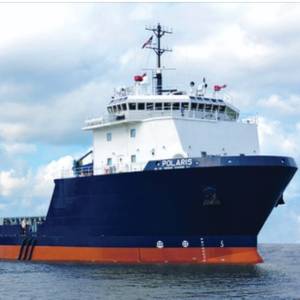
As oil exploration and production goes, so goes the market for Offshore Service Vessels (OSVs) and Platform Supply Vessels (PSVs). Throughout 2025, the prices of oil- which drives exploration and production (E & P), have softened, moving down towards $60/barrel amidst economic uncertainty and a wider than anticipated opening of the taps by major oil producers.

C&C Marine and Repair delivered M/V Capt. Pete Ciaramitaro, a 2,600-horsepower inland towboat, to Southern Devall. The vessel is the first delivery from C&C Marine’s six-vessel spec towboat program and was delivered just over two months after the contract was signed on July 20, 2026.

The future of maritime safety will not be determined by a choice between people and technology but will instead depend on how effectively the industry combines them. Capt. Naoki Saito, General Manager and Head of the Cyber Security Ship Management Systems Department, ClassNK fully acknowledges the critical place mandatory procedures occupy in upholding consistent maritime safety

Capt. Jonathan Andrechik transferred command of Coast Guard Sector New York to Capt. Doreen McCarthy Monday, during a change-of-command ceremony at Sector New York in Staten Island. Rear Adm. Michael Platt, Commander, Coast Guard Northeast District, presided over the ceremony.Capt. McCarthy reported to Sector New York and has served as the deputy commander since May of 2024.

The Administration has made American manufacturing, shipbuilding, and supply chain resilience national priorities. The Great Lakes region is home to steel, autos, agriculture, energy infrastructure, defense suppliers, and advanced manufacturing. The St. Lawrence Seaway carries maritime commerce into that region.

MASS and Littoral OpTech conferences converge in Atlantic CanadaThe 13th annual Maritime & Arctic Security & Safety Conference (MASS), hosted by the Atlantic Canada Aerospace & Defence Association (ACADA), and presented by Saab Canada, Inc., will be held June 14-16 at the Convention Centre in St. John's, Newfoundland and Labrador.

The United States Coast Guard (USCG) has rescued a family of three who had been missing for seven days in waters off the Federated States of Micronesia.The crew of the USCGC Midgett located the family on April 6 after authorities reported the vessel overdue following its departure from Fananu Island on March 30.
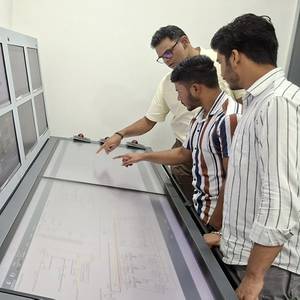
Anglo-Eastern Univan Group introduced its methanol bunkering simulator in October, developed in collaboration with Wärtsilä, a system that delivers both theoretical and practical training for the safe handling of methanol as a marine fuel. This follows the launch of the world’s first functional LNG ((Liquefied Natural Gas))/ammonia bunkering station skid at the Anglo-Eastern Maritime Academy
The Towing Vessel Inspection Bureau (TVIB) announced that Rio Marine, Inc. has become the first maritime services provider to achieve certification under the American Waterways Operators’ (AWO) Responsible Carrier Program (RCP).The RCP is a safety management system for the tugboat, towboat, and barge industry that sets standards for safety, environmental stewardship, and continuous improvement.