

Kawasaki Kisen Kaisha (“K” Line), has taken delivery of the 174,000-cubic-metre LNG carrier Puteri Kelantan, the third vessel of its type delivered for Petronas LNG in 2026.The vessel, owned by a joint venture company led by “K” Line, was delivered on September 24 by Hudong-Zhonghua Shipbuilding (Group) in China.

The headline grabbing global attention is simple enough: a shipowner reportedly paid more than $5 million for a single Panama Canal transit slot. But that may only mark the start of an historic surge in shipping costs.The vessel was a liquefied petroleum gas (LPG) carrier operated for South Korea's SK Gas.

For decades, floating nuclear power occupied a niche position in the energy debate – technically feasible, strategically intriguing, but commercially marginal. Today, however, combined pressures of decarbonization, energy security, land constraints, rising electricity demand and water scarcity are making floating nuclear power a more serious proposition for policymakers, utilities

The United States has become the world's largest oil exporter, upending a decades-old order long dominated by Saudi Arabia and Russia, a shift that tightens American companies' grip on energy markets as Washington's war with Iran reshapes global energy trade.America's ascendancy to the top spot marks a stunning reversal for a country that was dependent on Middle Eastern oil for decades and

Two supertankers and one liquefied natural gas (LNG) tanker exited the Strait of Hormuz earlier this week with their transponders switched off, and are heading for India and China, shipping data from LSEG and Kpler showed.The vessels joined a number of tankers leaving the Gulf this month, although oil and LNG traffic overall has still been limited.

"So far this year, ship transits via the Panama Canal have increased 8% y/y to a daily average of 38, driven by the tanker sector. Transits have been especially high during the past five weeks, rising 16% y/y, as US energy exports to the Pacific jumped,” says Filipe Gouveia, Shipping Analysis Manager at BIMCO.

This year’s IMO International Day for Women in Maritime (May 18) focuses on embedding gender equality at every level of the maritime industry, both on shore and at sea.Under the theme “From Policy to Practice: Advancing Gender Equality for Maritime Excellence”, the day highlights actions to translate international ambitions and commitments into tangible actions that will make a difference in the

Shipping giants CMA CGM and Hapag-Lloyd said on Sunday they had suspended all bookings to and from Cuba until further notice, with both citing a U.S. executive order issued on May 1, in the latest blow to the crisis-wracked island's economy.The temporary suspension of new orders by two of the world’s largest shipping companies could jeopardize as much as 60% of Cuba's shipping traffic by volume

Two more tankers laden with crude exited the Strait of Hormuz last week with trackers switched off to avoid Iranian attacks, Kpler shipping data showed, underscoring a rising trend to sustain Middle East oil exports.The very large crude carrier (VLCC) Basrah Energy loaded 2 million barrels of Upper Zakum crude from Abu Dhabi National Oil Co's (ADNOC's) Zirku terminal on May 1 and exited the

The diplomatic route in Iran is now exhausted, as last night the United States and Israel attacked Iran, sharply escalating security risks for commercial shipping in the Persian Gulf and adjacent waters, prompting immediate operational and insurance repercussions across the global maritime sector.

All-Cash Deal, Expanding Brazil FootprintTidewater Inc. (NYSE: TDW) has signed a definitive agreement to acquire Wilson Sons Ultratug Participações S.A. and its affiliate Atlantic Offshore Services S.A. (collectively, WSUT) in an all-cash transaction valued at approximately $500 million, including the assumption of existing debt.
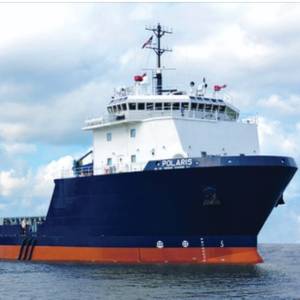
As oil exploration and production goes, so goes the market for Offshore Service Vessels (OSVs) and Platform Supply Vessels (PSVs). Throughout 2025, the prices of oil- which drives exploration and production (E & P), have softened, moving down towards $60/barrel amidst economic uncertainty and a wider than anticipated opening of the taps by major oil producers.