

Australian mining company Fortescue has signed an agreement with Belgian shipping and cleantech group CMB.TECH to charter up to 12 ammonia-capable bulk carriers, stepping up efforts to decarbonize maritime transport and support the development of green ammonia as a marine fuel.Under the agreement, Fortescue will charter 12 Newcastlemax dry bulk vessels, each with a carrying capacity of 210

"So far this year, ship transits via the Panama Canal have increased 8% y/y to a daily average of 38, driven by the tanker sector. Transits have been especially high during the past five weeks, rising 16% y/y, as US energy exports to the Pacific jumped,” says Filipe Gouveia, Shipping Analysis Manager at BIMCO.

Diamond Gas Jade, a 174,000-cu.-m. Liquefied Natural Gas (LNG) carrier invested by a joint venture under U-Ming Marine Transport Corp., held its grand naming ceremony on May 19 at the Samsung Heavy Industries Geoje Shipyard. Built by Samsung Heavy Industries, Diamond Gas Jade is equipped with the latest energy-saving environmental technologies and a dual-fuel propulsion engine.

Anemoi Marine Technologies’ Rotor Sail wind-assisted propulsion system has completed more than eight years of continuous commercial operation after M/V Afros successfully passed its second intermediate dry dock survey.The survey, conducted by Lloyd’s Register in China in April, confirmed the structural integrity and operational condition of the vessel’s four Rotor Sails, Anemoi said.

President Donald Trump said on Sunday that the United States would begin an effort to free up ships stranded in the Strait of Hormuz on Monday morning.Trump, in a post on his Truth Social site, gave few details about the operation, including whether the U.S. Navy would be involved.

Panama-flagged tanker Idemitsu Maru, carrying 2 million barrels of Saudi oil, crossed the Strait of Hormuz, LSEG shipping data showed on Tuesday, becoming the first Japan-linked crude tanker to do so since the Iran war began.Before the U.S.-Iran conflict broke out on February 28 and disrupted Middle East crude oil and liquefied natural gas supplies

The U.S.-Israeli war on Iran has threatened Gulf ports and disrupted global trade through the Strait of Hormuz, a vital waterway through which roughly a fifth of the world's oil and liquefied natural gas normally passes. Iran's Revolutionary Guards have warned that any ship passing through the narrow Strait will be targeted.Below is a list of reported attacks since the U.S.

Explosive-laden Iranian boats appear to have attacked two fuel tankers in Iraqi waters, setting them ablaze and killing one crew member on Wednesday, after projectiles struck four vessels in Gulf waters, said port, maritime security and risk firms.The latest attacks on ships linked to the U.S. and Europe mark an escalation in the conflict between Iran and U.S.

Three vessels have been hit by unknown projectiles in the Strait of Hormuz, maritime security agencies and sources said on Wednesday, as one of the strikes led to a fire onboard a ship and forced most of its crew to evacuate it.The Thailand-flagged bulk carrier Mayuree Naree was targeted and damaged approximately 11 nautical miles north of Oman, two maritime security sources said.

Amon Maritime was awarded investment grants of NOK 298 million ($29m) from Enova to support the construction of three new ammonia-fueled bulk carriers.The vessels, each in the Kamsarmax segment with a capacity of approximately 80,000–85,000 DWT, are designed to combine high energy efficiency with carbon free fuel.
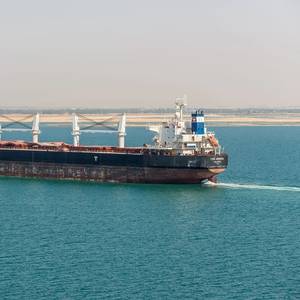
Star Bulk Carriers reported a weaker third quarter amid softening dry bulk markets, lower charter rates and a smaller operating fleet, while continuing to reshape its fleet through vessel sales, refinancing and newbuilding acquisitions.The company posted net income of $18.5 million for Q3 2025, down sharply from $81.3 million in the same period last year. Voyage revenues also fell to $263.
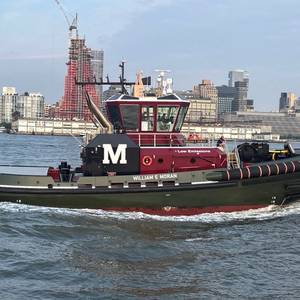
Moran Towing Corporation acquired Bisso Towboat Co, as it aims to accommodate growing needs of New Orleans and the Lower Mississippi River communities.Moran was founded in 1860 and is privately owned and operated. It offers ship assist services in 17 ports along the U.S. East and Gulf Coasts and has operated in New Orleans since 2006.