

A wave of new investment in dedicated shuttle tankers has been spurred by the age profile of the existing fleet coupled with surging developments in the Brazilian offshore market.Constituting a specialized asset class, dynamic positioning (DP) shuttle tankers are a flexible and cost effective way of lifting and transporting oil from offshore fields

Long-distance ferry routes form a key part of Japan’s national transport infrastructure, connecting the archipelago’s four major islands and littoral centers of population, commerce and industry.RoRo passenger (RoPax) ferry fleet renewal and development has been a constant process over the past two decades in particular
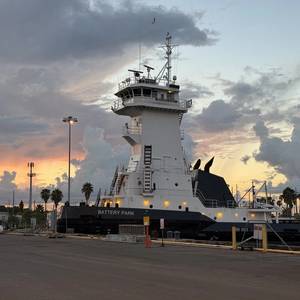
We are well into the discussions advising shipbuilders and operators how the U.S. will create a renaissance of the maritime industry. Federal Legislation, Executive Orders, and new foreign partnerships driving the promise of commercial competitiveness with the leading global shipbuilders. Most of the shipbuilding rhetoric indicates the domestic markets will be left to survive on their own.

Orders for alternative-fueled vessels totaled 137 in the first half of 2026, down from 155 in the same period a year earlier, according to figures from DNV's Alternative Fuels Insight (AFI) platform.DNV’s AFI has recorded 15 new orders for alternative-fueled vessels in June 2026.This consisted of 10 orders for LNG-fueled vessels, nine of which were car carriers and one a CO2 carrier.

Three stranded supertankers passed through the Strait of Hormuz on Tuesday, while seven empty Qatar-linked liquefied natural gas tankers have entered in recent weeks in an early sign Gulf gas shipping may be resuming, ship-tracking data showed.Iranian-linked tankers also continued to transit the vital waterway, according to the data, with traffic picking up on Monday as U.S.-Iran talks progressed.

Germany’s Lloyd Werft Bremerhaven has been selected as the shipyard partner for Beyond Horizons, a 155-meter superyacht that aims to introduce a new private members’ club concept to the luxury maritime market.The announcement marks a key milestone for the Maybach Ocean Club project, moving the vessel from concept into the construction phase.

China conducted military drills recently including live-fire exercises in waters east of the Philippines' Luzon Island, it said on Friday, as Manila and Washington host annual drills that extend towards disputed areas of the South China Sea.Over 17,000 troops from the U.S., the Philippines and allies began their annual Balikatan military exercises this week

Wilson Sons held a launch ceremony for the tugboat WS Halcyon Thursday, January 29, in Rio de Janeiro. It is the first of a new series of three high-powered tugs.Built at the company’s shipyard in Guarujá (São Paulo), WS Halcyon is a class 2312 tug (23 meters long and 12 meters wide) with azimuth propulsion and 70 tons of bollard pull

Belgian offshore contractor Jan De Nul has concluded the 2025 transport and installation campaign of three HVAC grid connection cables at TenneT’s DolWin kappa platform.When finalized, these cables will ensure the transport of almost 660 MW renewable electricity from two offshore wind farms, which is enough energy needed to power more than 800,000 German homes.
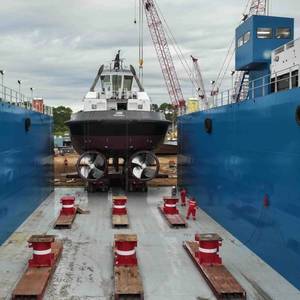
Master Boat Builders, Inc. announced it has taken delivery of a new floating dry dock, giving the company direct control over launch schedules and accelerating vessel deliveries.Designed and built by Conrad Shipyard, the dry dock measures 155’ long x 66’ wide with 41’ tall wing walls, features a 2,000‑ton lifting capacity, and incorporates a barge bow to enable efficient towing.
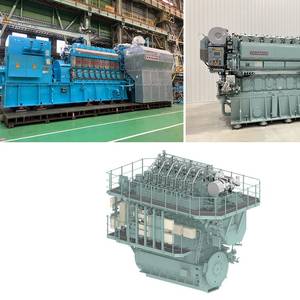
Kawasaki Heavy Industries, Ltd., Yanmar Power Solutions Co., Ltd. and Japan Engine Corporation announced they have successfully conducted the world’s first land-based operation of marine hydrogen engines. The demonstration took place at Japan Engine’s headquarters factory, where a newly installed liquefied hydrogen fuel supply system was utilized.
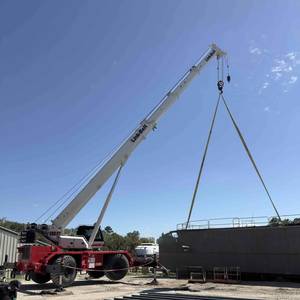
St. Johns Ship Building (SJSB), a subsidiary of Americraft Marine Group, announced the receipt and commissioning of a new 100-ton Link-Belt rough terrain crane, acquired through funding provided by the U.S. Department of Transportation’s Maritime Administration (MARAD) Small Shipyard Grant Program.The Link-Belt 100|RT is fabricated and assembled in Lexington, Kentucky, U.S.A.