

TOTE Services, LLC, a U.S. maritime services company specializing in vessel construction management and ship management, signed a contract with the U.S. Department of Transportation - Maritime Administration (MARAD) to serve as vessel construction manager (VCM) for the Missile Range Instrumentation Vessel (MRIV) program.

Yemen's Iran-aligned Houthis on Friday reached the strategic island of Perim in the Bab el-Mandeb Strait, four Yemeni government sources told Reuters, potentially tightening their grip on one of the world's vital shipping routes and further increasing the threat to energy markets in the widening Middle East war.

A container ship will depart from South Korea bound for Europe via the Arctic on Saturday, testing whether a route opened by melting sea ice can be commercially viable, but risking friction with Western allies, as the voyage requires Russian cooperation.If successful, the trip would be South Korea's first such commercial voyage to Europe via the Arctic

Technology identification, trial and adoption is cornerstone to running an efficient, cost-effective maritime operation. But with the speed of technological change, particularly in regards to Artificial Intelligence (AI), the process is neither straight nor short. We visited recently with Kenji Togasaki, SVP, Innovation Office, IINO Lines (USA)

Hanwha Philly Shipyard (HPSI) and TOTE Services were selected to deliver the Missile Defense Agency’s (MDA) Missile Range Instrumentation Vessels (MRIV). TOTE Services will serve as vessel construction manager (VCM), and HPSI will build the ships at its Philadelphia shipyard.The MRIV will replace the Pacific Tracker and Pacific Collector

For decades, floating nuclear power occupied a niche position in the energy debate – technically feasible, strategically intriguing, but commercially marginal. Today, however, combined pressures of decarbonization, energy security, land constraints, rising electricity demand and water scarcity are making floating nuclear power a more serious proposition for policymakers, utilities

Saudi Arabia and neighbouring Gulf producers will cheer the eventual reopening of the Strait of Hormuz, but the ensuing flood of oil risks eroding OPEC’s already fragile grip on the market.The Iran war and the closure of the vital waterway – through which nearly a fifth of the world’s oil and gas flowed before the conflict – have sharply diminished output from the Organization of the Petroleum

The United States, Britain and Australia are working together to develop unmanned undersea vehicles as part of their trilateral AUKUS defence pact, U.S. Secretary of Defense Pete Hegseth told reporters on Saturday.AUKUS said in a joint statement that delivery of the vehicles will start in 2027.

As global demand for data storage and processing accelerates — driven by cloud computing, streaming media, and the explosive growth of artificial intelligence — the physical footprint of data centers has become a growing challenge. Land-based facilities face mounting constraints: limited space, water scarcity, grid congestion, long permitting timelines and rising community opposition.
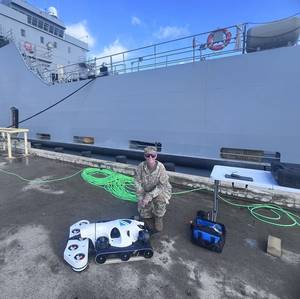
Sticking to legacy tactics won't beat China — adopt Secretary Hegseth's and the Army initiatives or surrender the edge.In a recent address, Admiral Christopher Grady, Vice Chairman of the Joint Chiefs of Staff, underscored the urgent need for a robotic hull-cleaning system to enable anytime maintenance, reduce drag, boost speed, and minimize fuel consumption for naval vessels.
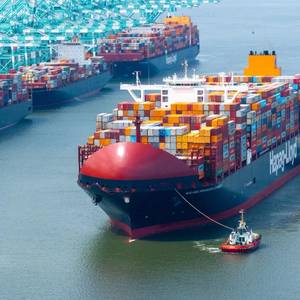
German container shipping firm Hapag-Lloyd on Thursday posted a 50% drop in nine-month net profit to 846 million euros ($986.6 million) and lowered the top end of its full-year earnings outlook, citing market volatility and rising costs.The company narrowed its full-year earnings before interest and taxes (EBIT) forecast to between 0.5 billion and 1.
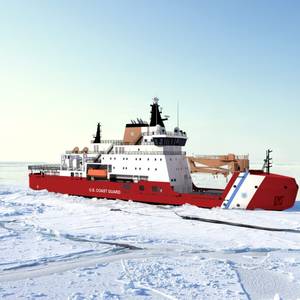
U.S. President Donald Trump and Finnish counterpart Alexander Stubb sealed an agreement on Thursday for the U.S. Coast Guard to acquire up to 11 icebreaker ships to bolster U.S. national security in the Arctic.Trump and Stubb have established friendly ties since Trump regained power in January, and the two met in March at the president's Mar-a-Lago club in Florida and played a round of golf.