

The U.S. Navy’s Military Sealift Command is a critical part of the United States’ national security equation, as any navy only goes as far as its supply chain allows. RADM Benjamin Nicholson, Commander, U.S. Navy Military Sealift Command, visited with Maritime Matters: The MarineLink Podcast, for a deep discussion on MSC

A.P. Moller Holding has agreed to acquire 100% of Oslo-based ship leasing company Ocean Yield from funds managed by investment firm KKR, expanding its maritime portfolio.Ocean Yield has interests in more than 70 vessels across several shipping segments, including gas carriers, LNG carriers, container ships, crude, product and chemical tankers, and dry bulk carriers.

CMA CGM delivered a resilient first quarter, but the numbers underscore the increasingly complex environment facing the global container shipping and logistics giant.The Marseille-based group reported first-quarter revenue of $13.23 billion, essentially flat year-over-year, while EBITDA fell 31.6% to $2.11 billion and net income dropped sharply to $250 million, down from $1.

MISC Group (MISC) named two new generation Liquefied Natural Gas (LNG) carriers, Seri Dian and Seri Dayang, on May 7, 2026. The addition of these vessels further strengthens its long-standing partnership with SeaRiver Maritime LLC (SRM), a wholly owned subsidiary of ExxonMobil.Constructed by Hanwha Ocean Co., Ltd.

President Donald Trump's administration said on Monday that it had reached a deal to end two more U.S. offshore wind leases in exchange for $885 million in pledged investments in domestic fossil fuels.The projects, one in the Atlantic and one in the Pacific, are managed by Ocean Winds, a joint venture between France's ENGIE and Portugal's EDP Renewables.

Vard, the Norwegian subsidiary of the Fincantieri Group, has signed a new contract with existing customer Ocean Infinity for the design and construction of four Multi-Purpose Robotic Vessels (MPVs).The contract, whose value exceeds $230 million (€200 million), also includes a comprehensive scope of supply from Vard Electro, which will deliver the full suite of SeaQ systems for remote operations.

Kawasaki Heavy Industries and Japan Suiso Energy have signed a contract to build the world’s largest liquefied hydrogen carrier, marking a step toward the commercialization of an international hydrogen supply chain.The vessel will have a cargo capacity of about 40,000 cubic meters and will be built at Kawasaki Heavy Industries’ Sakaide Works in Kagawa Prefecture.

Japan will conduct test mining of rare-earth-rich mud from the deep seabed off Minamitori Island, some 1,900 kilometres (1,180 miles) southeast of Tokyo, from January 11 to February 14, the head of the government-backed project said.The operation will mark the world's first attempt to continuously lift rare-earth mud from a depth of around 6,000 meters on to a vessel.

Hanwha Ocean has delivered the Wind Mover wind turbine installation vessel (WTIV) to offshore wind contractor Cadeler, completing the second vessel in the company’s M-class series about one month ahead of schedule.The vessel was formally signed over on November 28 and sailed away on December 2, following a naming ceremony at Hanwha Ocean’s shipyard in Korea.
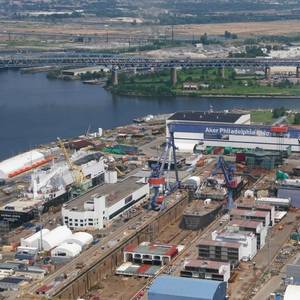
The South Korean-owned Philly Shipyard in the United States does not currently have the capability to build a nuclear-powered submarine, Prime Minister Kim Min-seok said on Thursday during a parliamentary hearing.His remarks come after U.S. President Donald Trump wrote on social media last week that he had given approval for South Korea to build a nuclear-powered submarine and that it would be
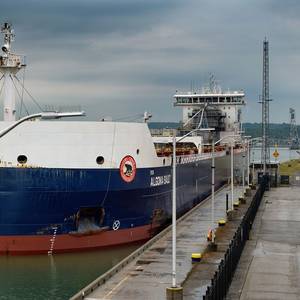
St. Catharines, Ontario–based Algoma Central Corporation (TSX: ALC) reported a solid third quarter for 2025, marked by fleet milestones, steady revenue growth across segments, and ongoing investment in next-generation vessels.For the quarter ended September 30, Algoma posted revenue of C$228 million, up from C$205 million a year earlier, and EBITDA of C$89.7 million, a 19% increase year-over-year.
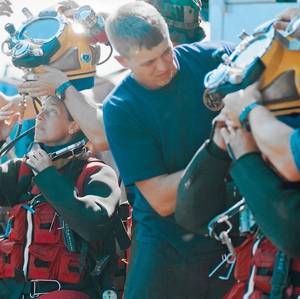
By Captain Bobbie Scolley, U.S. Navy (ret.) and Rear Admiral Tim Gallaudet, U.S. Navy (ret.)For more than six decades, spanning from 1905 to the late 1970s, the U.S. Navy’s diving apparatus for deep ocean operations and salvage remained fundamentally unchanged. During this period, the demographic of navy divers also saw little alteration.