

Northern Lights joint venture has taken delivery of its fourth dedicated liquefied CO2 (LCO2) carrier, completing the vessel fleet required for the first phase of its carbon capture and storage (CCS) transport and storage operations.The Northern Purpose has arrived in Norway following delivery from Dalian Shipbuilding Offshore Company (DSOC), joining sister vessels Northern Pioneer
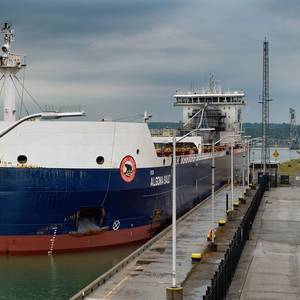
St. Catharines, Ontario–based Algoma Central Corporation (TSX: ALC) reported a solid third quarter for 2025, marked by fleet milestones, steady revenue growth across segments, and ongoing investment in next-generation vessels.For the quarter ended September 30, Algoma posted revenue of C$228 million, up from C$205 million a year earlier, and EBITDA of C$89.7 million, a 19% increase year-over-year.

Iron ore shipments on the Great Lakes totaled 2 million tons in January, a near match to 2025. Loadings were below the month’s 5-year average by 14.5 percent.Since 1880, Lake Carriers’ has represented the U.S.-flag Great Lakes fleet, which today can move more than 90 million tons of cargos annually that are the foundation of American industry, infrastructure, and power: iron ore, stone, coal

U.S.-flag Great Lakes freighters (lakers) carried 71.3 million tons of cargo in 2025, an 8.9 percent decrease from a year ago. 2025 cargo movement on the Great Lakes was 8.1 percent below the fleet’s 5-year average.Except for salt shipments, which increased by 4.1 percent, all commodity shipments decreased in 2025. Iron ore shipments were down 10.8 percent from 2024 to 39.1 million tons.

American Cruise Lines has announced that 2025 was a record-breaking year for the company, including winning 23 awards—cementing the company’s place as The Most Awarded U.S. Cruise Line.The company’s new ship, American Patriot, was named a top finalist for Best New River Cruise Ships by Travel Weekly.
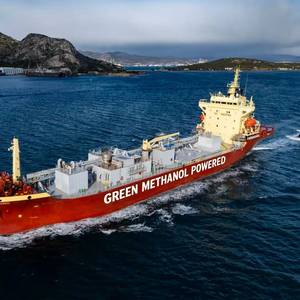
Heidelberg Materials Northern Europe has taken a decisive step toward low-emission coastal logistics with the development of a next-generation methanol-powered cement carrier, an 80% emissions-cutting vessel that could redefine short-sea bulk operations in Scandinavia. Planned to enter service in early 2028

“Between January and November 2025, cement shipments, including clinker, have jumped 13% y/y, driven by a 39% y/y increase in shipments to Africa’s Atlantic coast. The region is experiencing high economic growth, fast urbanisation and rapid development in infrastructure, supporting construction activity and boosting the demand for cement,” says Filipe Gouveia, Shipping Analysis Manager at BIMCO.

Fuel-agnostic and suitable for newbuilds and retrofit, Organic Rankine Cycle waste heat recovery systems are making headway as an energy-efficiency measure.Market prospects are looking so good for waste heat recovery systems that Orcan Energy recently expanded its industry relationships by partnering with Goltens on installations.

Mermaid Subsea Services (UK) has completed a fast-track subsea recovery campaign in the North Sea for a major operator.The operation involved the internal and external severance of casing, conductor, guide pipe and cement lines, as well as local seabed excavation and recovery of the CAN-Basic structure.
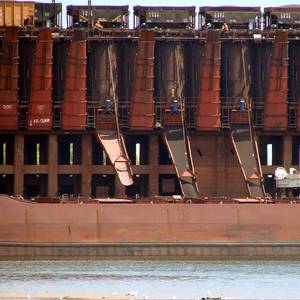
Shipments of iron ore from U.S. ports on the Great Lakes decreased 14.2 percent from 2024 to 4.7 million tons in September. Shipments were below the month’s 5-year average by 7.4 percent.Year-to-date, the iron ore trade stands at 31.4 million tons, a 14 percent decrease compared to last year. Through September, iron ore loadings are 6.

German Economy Minister Katherina Reiche on Monday unveiled a 6 billion euro ($7 billion) funding initiative aimed at industrial decarbonisation, incorporating carbon capture and storage (CCS) technology into the country's climate protection contracts for the first time.The program targets energy-intensive sectors such as chemicals, steel, cement and glass

A Tanzania-flagged vessel is partially submerged south of Iran's Kish Island, Iran's semi-official Tasnim news agency reported on Wednesday, adding that the cause of the incident was under investigation.The agency cited an Iranian official as saying the nine crew members were rescued from the vessel, which was carrying 2,500 tons of white cement.The incident occurred around 13:30 local time.