

When Saudi Aramco told its oil buyers in a letter this week that it had no clear idea which port it would use for April exports, it laid bare a new reality: Iran, not the United States, holds the key to reopening the global energy market.The letter, sent to Saudi oil buyers around the world, said they might receive oil from the Red Sea, but they might still get it from the Gulf.

Norwegian shipbuilder Ulstein Verft has launched first of the two offshore wind commissioning service operation vessels (CSOVs) under construction at its yard for J.P. Morgan.On January 2, Ulstein Verft towed the CSOV yard number 322 from the dock hall to the outer dock, where the yard’s heavy-lift department installed the vessel’s tower using a crawler crane with a lifting capacity of up to 600
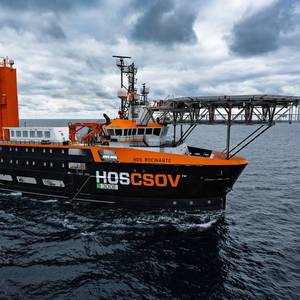
Eastern Shipbuilding Group (ESG) completed and redelivered HOS Rocinante, a first-of-its-kind U.S.-flagged Service Operation Vessel (SOV) converted for Hornbeck Offshore Services.The vessel marks a milestone in the evolution of the U.S. offshore service fleet to be future-ready for both the offshore wind and petro-energy sector demands for broadly capable marine support vessels.
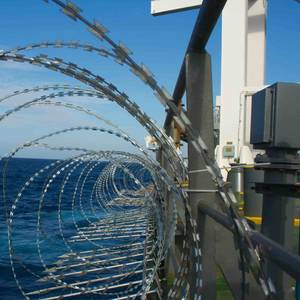
Pirates have boarded a Malta-flagged products tanker off Somalia, maritime security sources said on Thursday, while the vessel's manager said the ship's 24 crew members were safe.Attacks on vessels by armed assailants in recent days have raised concerns for shipping lanes in a region across which critical energy and goods are transported to global markets.
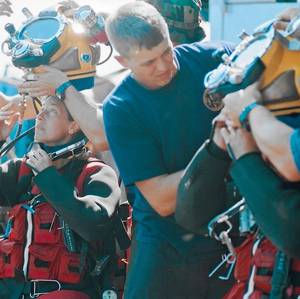
By Captain Bobbie Scolley, U.S. Navy (ret.) and Rear Admiral Tim Gallaudet, U.S. Navy (ret.)For more than six decades, spanning from 1905 to the late 1970s, the U.S. Navy’s diving apparatus for deep ocean operations and salvage remained fundamentally unchanged. During this period, the demographic of navy divers also saw little alteration.
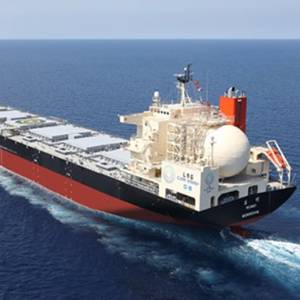
Mitsui O.S.K. Lines (MOL), Kanadevia Corporation, and Yanmar Power Solutions have achieved a 98% methane slip reduction rate in onboard trials of LNG-fueled vessels, exceeding their initial target of 70%.The trials are part of the Green Innovation Fund Project ‘Development of Next-Generation Vessels’ led by Japan’s New Energy and Industrial Technology Development Organization (NEDO).

The impact of software on the performance of vessels and fleets was described by ABS Chairman and Chief Executive Christopher J. Wiernicki at a launch event in Greece for ABS Wavesight Advantage, a new intelligent platform.“In an industry where every ton and every ton-mile counts, ABS Wavesight Advantage puts the Power of One in your corner.

Shares in Orsted plunged to a record low on Monday as the wind farm developer asked shareholders for $9.4 billion to help fund a U.S. project, after potential partners were put off by U.S. President Donald Trump's hostility to wind power.The 60 billion crowns ($9.4 billion) rights issue is worth around half of the Danish company's market value as of Friday's close.

Van Oord's new offshore wind installation vessel Boreas was officially christened on June 18 in Rotterdam. The event marked a milestone in Van Oord’s commitment to enhancing the energy transition. In addition, Van Oord announced that it had become the first marine contractor to receive approval on science-based targets for its decarbonization approach. The Boreas was christened by Ms.
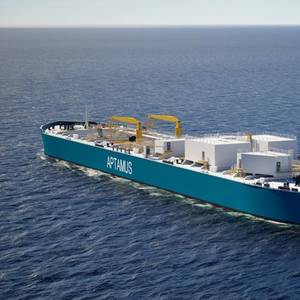
ABS awarded approval in principle (AiP) to Overseas Shipholding Group, Inc. (OSG), the parent company of Aptamus Carbon Solutions, for its preliminary design of a liquefied carbon dioxide (LCO2) barge.The development of the barge design is a core component of the Tampa Regional Intermodal Carbon Hub (T-RICH) project to receive
Confusion over new fuels will not be helped by the fact that each one has a good and bad version. The science on grey ammonia, grey methanol, and palm oil biofuel show that these are probably worse for the planet, if adopted, than unfettered continuation of fossil fuel consumption.
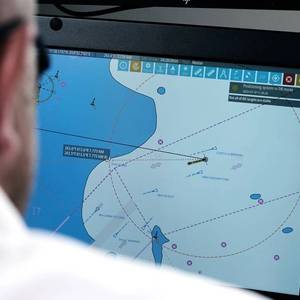
With approval from the Danish Emergency Management Agency, DanPilot and Danelec are now initiating a test program for remote pilotage—the first of its kind in the world. The approval marks a significant step towards a technological paradigm shift, opening new possibilities for safety, climate action, and operational efficiency in the maritime sector.